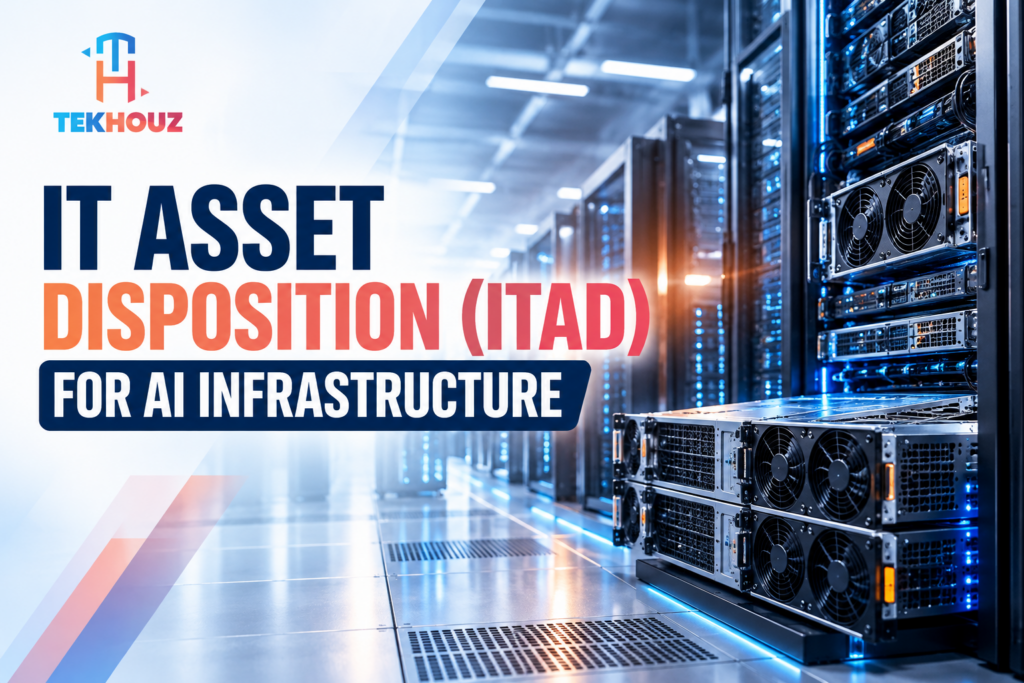
Artificial intelligence is changing how enterprises build and manage their IT infrastructure. Businesses are investing in GPU servers, high-performance computing systems, advanced storage, and powerful networking equipment to support increasingly demanding workloads.
But as infrastructure evolves, older equipment eventually needs to be upgraded, replaced, relocated, or retired.
What happens to those assets next?
Some servers may still have resale value. Storage devices could contain sensitive business information. Certain components may be suitable for refurbishment, while others need responsible recycling.
Simply removing old equipment and sending it away is not a complete asset management strategy.
This is where IT Asset Disposition (ITAD) becomes important.
ITAD helps organizations manage retired IT equipment through processes such as asset inventory, secure data sanitization, refurbishment, resale, recycling, and final disposition.
For enterprises investing in AI infrastructure, an effective ITAD strategy can help protect sensitive data, improve asset accountability, and identify opportunities to recover value from retired hardware.
In this guide, we’ll explore ITAD best practices for AI infrastructure, the common mistakes enterprises should avoid, and how Tekhouz can support businesses with their IT asset lifecycle requirements.
What Is IT Asset Disposition (ITAD)?
IT Asset Disposition, commonly known as ITAD, is the process of managing IT equipment that an organization no longer needs for its current operations.
Rather than treating every retired device as electronic waste, ITAD considers the appropriate next step for each asset.
Depending on its condition, security requirements, and market value, equipment may be:
- Reused: Redeployed within the organization.
- Refurbished: Tested, repaired, or prepared for further use.
- Resold: Sold into an appropriate secondary market.
- Recycled: Processed through suitable electronic waste recycling channels.
- Destroyed: Physically destroyed when required by the applicable data security or asset disposition policy.
ITAD can apply to everyday business computers, enterprise servers, storage arrays, networking equipment, GPU servers, and other IT hardware.
For enterprises, the objective is to manage retired equipment securely and responsibly while maintaining visibility into where assets go and how they are handled.
In simple terms, ITAD is not just about getting rid of old technology. It’s about deciding what should happen to it next.
Why Is ITAD Important for AI Infrastructure?
AI infrastructure introduces additional considerations because of the value, complexity, and data-handling requirements associated with high-performance computing equipment.
1. AI Hardware Can Retain Significant Value
GPU servers, accelerators, high-performance storage, and networking components can represent substantial capital investments.
When an organization upgrades its infrastructure, some retired equipment may still be suitable for redeployment, refurbishment, or resale.
However, the potential recovery value depends on factors such as hardware specifications, condition, configuration, demand, and processing costs.
A structured ITAD process helps enterprises evaluate these options before committing equipment to disposal.
2. Data Security Does Not End When Equipment Is Retired
AI systems and enterprise servers may process confidential business information, customer records, intellectual property, model-related data, and other sensitive information.
Removing equipment from a network or deleting files does not automatically establish that its data has been securely removed.
Organizations need appropriate data sanitization or destruction procedures before equipment is reused, resold, or disposed of.
3. AI Infrastructure Changes Quickly
Computing requirements can change as organizations adopt new AI applications, upgrade GPU generations, or redesign their infrastructure.
This creates a continuing need to evaluate equipment that is no longer suitable for its original purpose.
An ITAD strategy can help businesses incorporate asset recovery and end-of-life planning into their broader infrastructure lifecycle management.
4. Enterprises Need Asset Accountability
When large quantities of servers, storage devices, and networking equipment are retired, tracking every asset becomes increasingly important.
Organizations need to know which equipment was removed, where it went, how data-bearing devices were handled, and what happened to the assets afterward.
Accurate records support internal controls, financial reconciliation, and applicable audit requirements.
7 ITAD Best Practices for Enterprises Managing AI Infrastructure
A well-planned ITAD program should address the entire asset disposition journey, from identifying retired equipment to documenting its final outcome.
1. Maintain an Accurate IT Asset Inventory
The first step is understanding exactly what your organization owns and which assets are ready for retirement.
An incomplete inventory can lead to misplaced equipment, inaccurate financial records, and missed recovery opportunities.
Enterprises should maintain records that may include:
- Manufacturer, model, and serial number
- Asset tag and physical location
- Hardware configuration and condition
- GPU, CPU, memory, and storage specifications where relevant
- Data-bearing components
- Estimated recovery value
- Planned disposition method
For AI infrastructure, recording GPU models, server configurations, and component details can help determine whether equipment is suitable for redeployment or resale.
Best practice: Reconcile the physical inventory against existing asset records before equipment leaves the facility.
2. Prioritize Secure Data Sanitization and Destruction
Data security should be an essential part of every ITAD program.
Retired servers, SSDs, HDDs, backup devices, and storage arrays may retain sensitive information even after they have been disconnected from production systems.
Common approaches include:
- Data sanitization: Applying an appropriate method to make stored information unrecoverable for the intended level of protection.
- Cryptographic erase: Using supported and properly implemented encryption-key sanitization where appropriate.
- Physical destruction: Destroying media when required by security policies, risk assessments, or applicable requirements.
The appropriate approach depends on the storage technology, data sensitivity, intended reuse, and organizational policies.
The National Institute of Standards and Technology (NIST) provides guidance on media sanitization in its publication, Guidelines for Media Sanitization (SP 800-88 Rev. 2).
Enterprises should establish clear procedures for verifying the outcome and retaining appropriate records.
Best practice: Define data sanitization requirements before equipment is collected or transferred, not after it has left your control.
3. Establish Secure Handling and Chain of Custody
Asset tracking should continue throughout the disposition process.
When equipment moves between an enterprise facility, a logistics provider, a processing location, or another destination, organizations need appropriate controls to maintain accountability.
Depending on the project, these controls may include:
- Documented asset collection
- Secure packaging and transportation arrangements
- Transfer and receipt records
- Identification of data-bearing devices
- Access controls for sensitive equipment
- Reconciliation of assets at each required stage
This is particularly important when equipment contains confidential information or has significant financial value.
A clear chain of custody helps organizations identify where assets are and establish how they were handled.
4. Evaluate Assets for Refurbishment, Reuse, and Resale
One of the most valuable aspects of ITAD is identifying equipment that may have a useful life beyond its original deployment.
Before sending assets for recycling, enterprises should consider their condition, configuration, age, compatibility, and potential market demand.
For example, a retired server may no longer meet an organization’s current AI computing requirements but could still be suitable for another workload or a secondary market.
Potential disposition options include:
| Asset type | Potential disposition |
| Functional servers | Redeployment or resale |
| Eligible GPU systems | Testing, refurbishment, or resale |
| Usable storage and networking equipment | Reuse or resale, subject to security requirements |
| Repairable hardware | Assessment and refurbishment |
| Equipment unsuitable for further use | Responsible recycling |
| Media requiring destruction | Approved destruction process |
These are potential outcomes, not guaranteed results. Every asset should be assessed individually.
Best practice: Evaluate recovery opportunities early in the infrastructure upgrade process so that asset value is considered before equipment is dismantled or discarded.
5. Plan ITAD Alongside AI Infrastructure Upgrades
ITAD should not be treated as an afterthought once new infrastructure has been installed.
When enterprises plan GPU upgrades, server replacements, data center migrations, or infrastructure consolidation, they should also determine what will happen to the equipment being retired.
This allows IT, procurement, finance, security, and facilities teams to coordinate their responsibilities.
A combined upgrade and disposition plan can help organizations:
- Identify assets scheduled for retirement.
- Plan data migration and sanitization requirements.
- Coordinate equipment removal and transportation.
- Evaluate potential recovery value.
- Estimate disposition-related costs.
- Maintain accurate asset records.
Planning ahead can reduce last-minute decisions and make the overall infrastructure transition easier to manage.
6. Choose Responsible Recycling and End-of-Life Processing
Not every retired asset can be reused or resold.
Equipment that is damaged, obsolete, uneconomical to repair, or unsuitable for further use may need to be recycled through appropriate channels.
Responsible ITAD practices consider how such equipment is handled and whether relevant environmental and downstream processing documentation is available.
Enterprises should evaluate providers based on their actual capabilities, applicable certifications, processing methods, and documentation.
Where environmental certifications or regulatory requirements are relevant, verify that they apply to the provider, facility, and services involved.
Best practice: Keep records of the final disposition of assets and use appropriate recycling channels for equipment that cannot be reused.
7. Maintain Complete Reporting and Audit Records
The final stage of ITAD is documenting what happened to every asset.
Without adequate records, an organization may struggle to verify whether equipment was recovered, resold, recycled, or securely destroyed.
Depending on the project, useful documentation may include:
- Final asset inventory and reconciliation
- Equipment collection and transfer records
- Data sanitization or destruction reports
- Certificates of destruction where applicable
- Refurbishment, resale, or recycling records
- Asset valuation and financial reconciliation
- Relevant environmental documentation
These records can help internal teams review the project, reconcile asset registers, and support applicable audit or compliance requirements.
Best practice: Define the reporting requirements before selecting an ITAD provider and confirm what documentation will be delivered.
Common ITAD Mistakes Enterprises Should Avoid
Even organizations with established IT teams can overlook important aspects of asset disposition.
Treating Every Retired Asset as E-Waste
Functional equipment may still have potential reuse or resale value. Sending it directly for recycling without an assessment can mean missing recovery opportunities.
Assuming Deleted Data Is Secure
Deleting files or formatting a drive does not necessarily establish that sensitive data has been securely removed.
Ignoring Asset Tracking
If equipment is removed without proper inventory and transfer records, organizations may struggle to establish its location or final disposition.
Waiting Until the Last Minute
Planning ITAD only after new infrastructure is installed can create logistical challenges, unnecessary storage requirements, and rushed decisions.
Choosing a Provider Based Only on Price
The lowest quote may not cover the full requirements for data security, asset tracking, transportation, reporting, and recovery evaluation.
The right provider should be assessed on its verified capabilities, service scope, security processes, and ability to meet project requirements.
How Tekhouz Can Help with IT Asset Lifecycle Management
For businesses investing in AI infrastructure, managing retired equipment requires a balance of data security, asset accountability, potential value recovery, and responsible end-of-life handling.
Tekhouz focuses on IT Asset Disposition (ITAD), certified data destruction, device refurbishment, and IT infrastructure support.
These service areas are relevant to enterprises evaluating how to manage retired IT assets as part of an infrastructure upgrade or lifecycle transition.
IT Asset Disposition
Tekhouz can be a point of contact for businesses looking to discuss their ITAD requirements and explore suitable options for managing retired IT equipment.
The goal is to help organizations consider the appropriate next step for their assets, whether that involves further use, refurbishment, potential resale, or responsible recycling.
Certified Data Destruction
Data security is a key consideration when retiring servers and other data-bearing equipment.
Tekhouz offers certified data destruction services to help businesses address their data security requirements during IT asset retirement.
The applicable methods, verification processes, documentation, and service scope should be confirmed for each project.
Device Refurbishment
Some retired equipment may remain suitable for further use after appropriate assessment and refurbishment.
Tekhouz provides device refurbishment services that are relevant to organizations evaluating options for equipment that has reached the end of its current deployment.
The suitability of individual assets depends on their condition, specifications, and intended use.
AI Infrastructure Lifecycle Considerations
As organizations expand or upgrade their AI infrastructure, equipment retirement should form part of the wider lifecycle plan.
Businesses can explore their requirements with Tekhouz to understand which IT asset management and related services may be appropriate for their project.
Explore the Tekhouz AI Infrastructure Solutions page to learn more.
A More Structured Approach to Asset Disposition
Every enterprise has different requirements based on equipment volume, security policies, facility location, and project scope.
When discussing a project with Tekhouz, businesses should establish:
- The type and quantity of IT assets involved
- The location and expected project timeline
- Data sanitization or destruction requirements
- Potential refurbishment or recovery options
- Required documentation and reporting
- The specific services available for the project
This helps establish clear expectations before the disposition process begins.
How to Choose the Right ITAD Partner for Your Enterprise
Before engaging an ITAD provider, evaluate the following areas.
Data security: Can the provider explain the sanitization or destruction methods applicable to your equipment?
Asset accountability: Are inventory, tracking, and transfer records maintained throughout the process?
Value recovery: Can suitable assets be assessed for reuse, refurbishment, or resale?
Responsible recycling: Are appropriate recycling routes and relevant records available for equipment that cannot be reused?
Documentation: Will you receive the reports required by your organization?
Service capabilities: Does the provider offer the specific services, geographic coverage, and project support you need?
Certifications and controls: Are the provider’s claims verifiable and relevant to the actual services being delivered?
The right partner should help you understand the process, clarify responsibilities, and establish measurable project requirements.
Frequently Asked Questions About ITAD for AI Infrastructure
1. What are ITAD services for data centers?
ITAD services for data centers help organizations manage retired IT equipment through processes such as asset inventory, data sanitization, refurbishment, resale, recycling, and final disposition. The exact services depend on the provider and project requirements.
2. Why is ITAD important for AI infrastructure?
AI infrastructure can include expensive GPU servers, accelerators, storage systems, and networking equipment. An ITAD strategy helps organizations evaluate suitable recovery options, protect sensitive data, maintain asset accountability, and manage equipment that is no longer needed.
3. Can retired GPU servers be resold?
Potentially, yes. GPU servers may retain value depending on their model, configuration, condition, compatibility, and market demand. Appropriate data security measures and equipment assessments should be completed before reuse or resale.
4. How should enterprises handle data on retired servers?
Organizations should identify all relevant data-bearing devices and select appropriate sanitization or destruction methods based on media type, information sensitivity, security policy, and applicable requirements. The process should be verified and documented.
5. What is the difference between ITAD and e-waste recycling?
ITAD is a broader asset disposition process that can include inventory, secure data handling, refurbishment, resale, reuse, and recycling. E-waste recycling focuses on processing discarded electronic equipment through appropriate recovery and recycling channels.
6. When should an enterprise start planning ITAD?
Ideally, ITAD planning should begin during the early stages of an infrastructure upgrade, data center migration, or hardware refresh. Early planning gives teams time to inventory assets, define data security requirements, assess recovery opportunities, and coordinate logistics.
7. How can Tekhouz support IT asset disposition requirements?
Tekhouz focuses on ITAD, certified data destruction, device refurbishment, and IT infrastructure support. Enterprises can contact the team to discuss their requirements and confirm the services appropriate for their project.
Conclusion: Make IT Asset Disposition Part of Your AI Infrastructure Strategy
AI infrastructure investments do not end when new servers are installed. Organizations also need a clear strategy for the equipment being replaced.
A structured ITAD program can help enterprises improve asset accountability, protect sensitive information, identify potential recovery opportunities, and manage retired hardware responsibly.
By integrating asset disposition into infrastructure planning, businesses can make more informed decisions about what happens to their equipment at every stage of its lifecycle.
Whether your organization is upgrading GPU servers, replacing enterprise storage, consolidating data centers, or managing surplus IT hardware, planning ahead is essential.
Looking to manage your retired IT assets more effectively?
Tekhouz supports IT Asset Disposition, certified data destruction, device refurbishment, and IT infrastructure support.
Discuss your requirements with Tekhouz to explore the appropriate options for your IT asset lifecycle needs.
Explore: Tekhouz AI Infrastructure Solutions
Visit: Tekhouz
Manage your IT assets responsibly. Plan your next infrastructure transition with Tekhouz.
